Leg Workout at Home: A Simple No-Equipment Plan
By:Author:Green Diet Editorial
Updated on:October 18, 2026
- Building a Leg Workout at Home Step by Step
- How Often a Home Leg Workout Should Happen
- Fitting a Leg Workout Into a Normal Week
- A Four-Week Starting Plan for Home Leg Training
- What to Expect As a Home Leg Routine Settles In
- Mistakes That Make Home Leg Workouts Less Effective
- Supporting a Home Leg Workout With Green Diet
- Making Home Leg Training Part of Your Routine
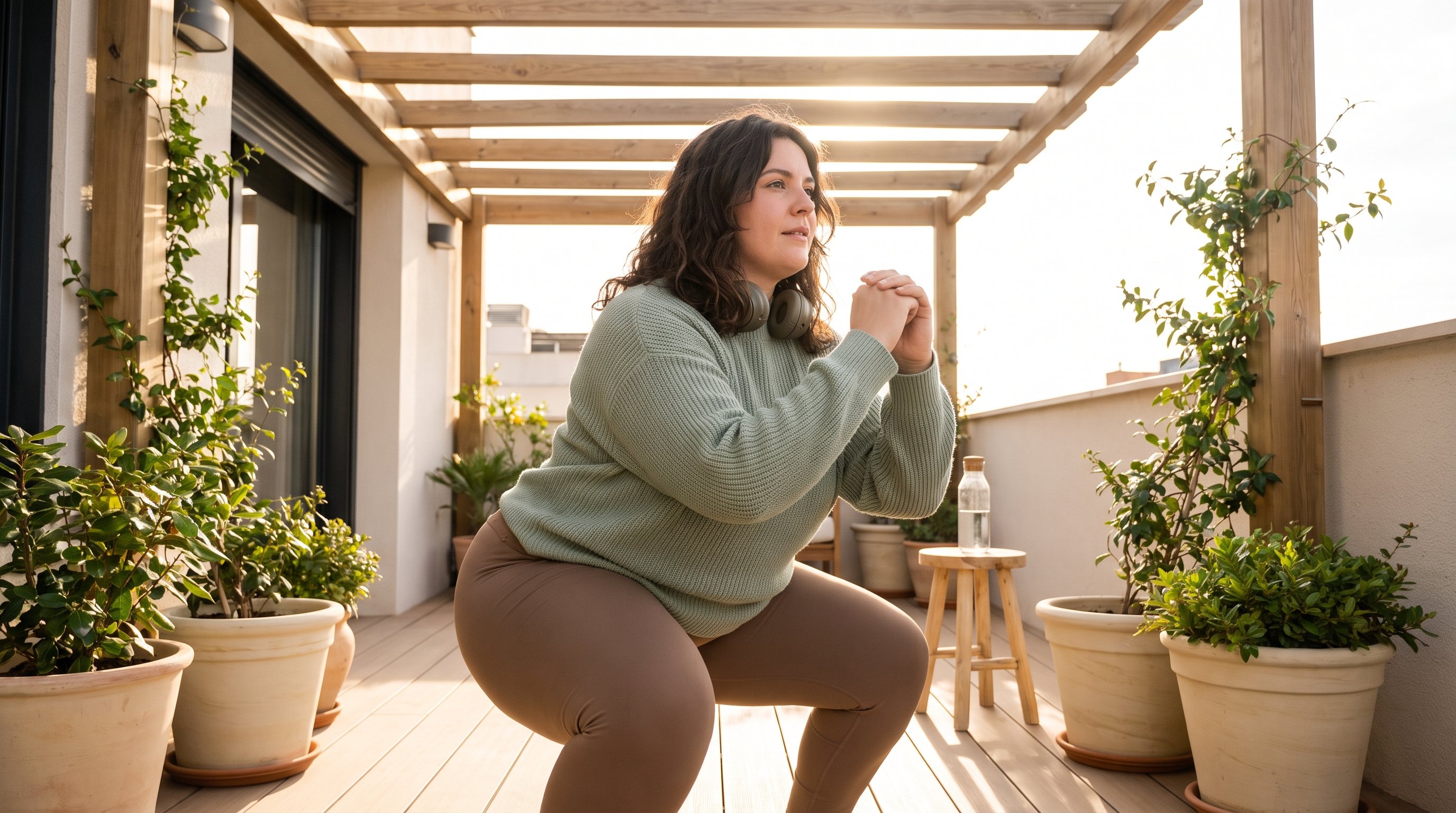
A leg workout at home works because your bodyweight is enough resistance to challenge your muscles when you move through a full range of motion and control the tempo.
Squats, lunges, step-ups and glute bridges load the same muscle groups a gym machine would, just using gravity and your own limbs instead of a stack of plates.
This guide covers how to structure a session, how often to train, a simple four-week starting plan, the mistakes that slow people down, and how to keep the whole thing going once the first few weeks are over.
Building a Leg Workout at Home Step by Step
You don't need a plan with fifteen exercises. A short, repeatable structure beats a complicated one you abandon after a week.
A Simple Session Structure
- Warm up for a few minutes - march on the spot or do slow bodyweight squats to get blood moving into the legs.
- Start with squats - two or three sets, focusing on sitting the hips back and keeping the knees tracking over the feet.
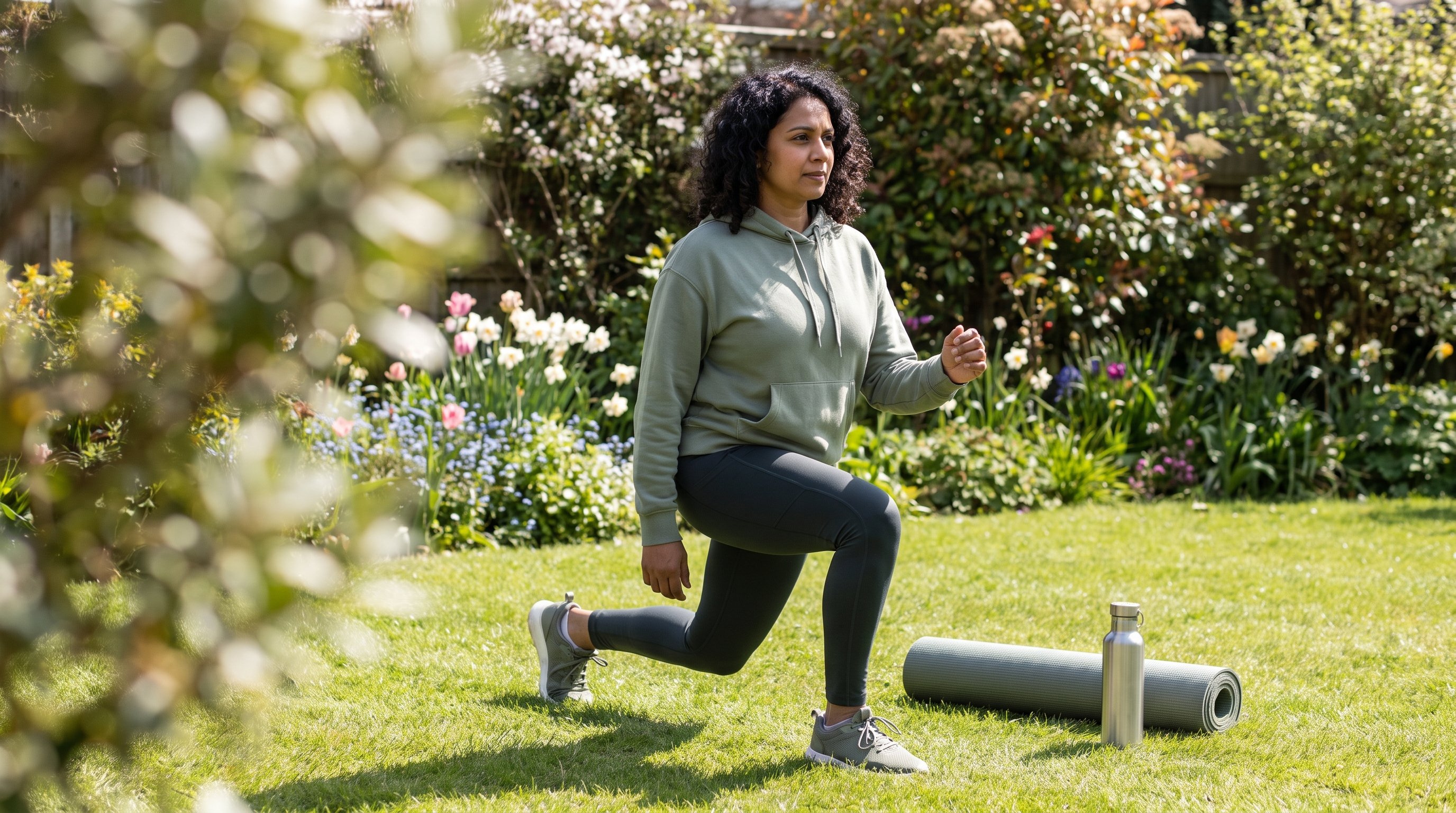
- Move to lunges - alternate legs, stepping forward or backward, which challenges balance as well as strength.
- Add step-ups - using a sturdy chair or low step, driving through the front foot each time.
- Finish with glute bridges - lying on your back, lifting the hips, which works the muscles squats and lunges don't fully reach.
- Stretch briefly - a few minutes of calf, quad and hamstring stretches to close the session.
That's six moves, no equipment, and a session that can realistically run twenty to thirty minutes once you know the moves.
How Often a Home Leg Workout Should Happen
Frequency That Fits Recovery
Legs are large muscle groups and they need recovery time between sessions, so two to three sessions a week with a rest day in between tends to work better than training every single day.
| Situation | Suggested Frequency | Notes |
|---|---|---|
| Just starting out | 2 sessions weekly | Focus on form over reps |
| Building a habit | 3 sessions weekly | Rest day between sessions |
| Short on time | 2 sessions weekly | Shorter 15-minute sessions |
| Already active | 3-4 sessions weekly | Add extra sets, not days |
There's no single magic number here, it's about finding a frequency you can actually repeat week after week without your legs feeling constantly sore.
Fitting a Leg Workout Into a Normal Week
Most people don't skip leg day because it's hard, they skip it because it never gets a fixed slot in the week.
Attaching the workout to something that already happens daily, like right after you brush your teeth in the morning or before you sit down for dinner, removes the need to decide each day whether you'll do it.
This is also where the rest of your routine matters, because strength work on tired legs and an under-fuelled body feels harder than it needs to.
Guided exercise sessions sit alongside meal plans for exactly this reason, so the eating side and the movement side aren't working against each other.
A Four-Week Starting Plan for Home Leg Training
The order below matters more than the exact numbers, since the point is to build the habit first and add difficulty second.
| Stage | Focus | What Changes |
|---|---|---|
| Week 1 | Learn the moves | 2 sessions, bodyweight only |
| Week 2 | Add a third session | Same exercises, more reps |
| Week 3 | Slow the tempo | Pause at the bottom of squats |
| Week 4 | Add single-leg work | More step-ups, fewer rest breaks |
By the end of four weeks, the goal isn't a dramatic transformation, it's that the moves feel familiar and the session feels normal rather than a chore.
What to Expect As a Home Leg Routine Settles In
The first week or two usually brings some muscle soreness, especially if squats and lunges are new to your legs.
That soreness tends to ease as your body adapts to the movements, though exactly when that happens varies from person to person.
The point where most people quit isn't week one, when motivation is high, it's around week three or four, when the novelty wears off and the session starts competing with everything else going on that day.
Treating the workout as a fixed appointment rather than something you'll get to if there's time is what usually gets people past that point.
Mistakes That Make Home Leg Workouts Less Effective
Rushing Through the Reps
Moving fast through squats and lunges reduces how much work the muscle actually does, so slow down and focus on controlling the movement in both directions.
Skipping the Warm-Up
Going straight into lunges on cold legs raises the chance of feeling stiff or strained afterward, so a few minutes of easy movement first makes the session more comfortable.

Training Legs Every Day
More isn't automatically better, since muscles need recovery days to actually adapt, so stick to two or three sessions with rest in between.
Ignoring the Rest of the Body
Legs don't work in isolation from how you eat or sleep, so pairing the workout with steady meals and enough rest makes the effort worth more.
Expecting Changes to Show Up Fast
Strength and muscle tone build gradually, not in a single week, so judge the routine by whether you're still doing it a month in, not by how your legs look after day three.
Supporting a Home Leg Workout With Green Diet
A leg workout at home is one part of the picture, what you eat around it is the other.
Green Diet pairs a meal plan built around food you already like, whether vegetarian, vegan or plant-based, with guided low-impact exercise sessions, so training your legs doesn't have to mean figuring out nutrition on your own.
Progress tracking for steps, water and weight sits in the same place, which makes it easier to notice whether the habit is actually sticking week to week.
Eat Clean Every Day
Natural Weight Loss Plan
Making Home Leg Training Part of Your Routine
Pick two days this week, set a rough time, and run through the six-move session once before worrying about adding anything else.
A meal planning service can sit alongside that routine if you want the eating side handled too, but the workout itself needs nothing more than floor space and a chair.
FAQ
Bodyweight moves like squats and lunges can challenge your muscles enough to build strength, especially when you slow the tempo or add single-leg variations. As the moves get easier, adding more reps or pausing at the hardest point keeps the challenge going.
A home leg workout and a gym session both work the same muscles, the difference is just the type of resistance used. For most people starting out, consistency at home beats an occasional gym visit.
Squats and glute bridges need almost no floor space, so you can still get a full session done in a small room. A sturdy chair covers the step-up, and lunges can be done in place rather than walking forward.
Green Diet includes low-impact leg-focused exercise options, so the workout side doesn't need a separate plan. Combining that with its meal plans and progress tracking keeps the eating and movement parts of the routine in one place.
Share this post